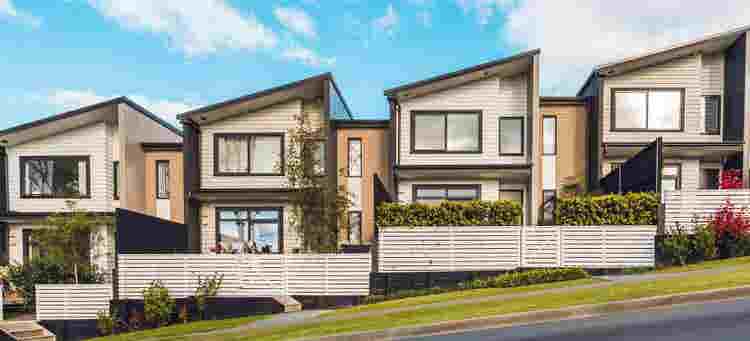
Building a Home (Construction)
Your step by step guide to the home building process and applying for a construction loan{sub-heading}

Welcome{yellow-border}
Building your own house, or doing a major renovation, is a great way to get exactly what you want in a home.
But building can be a complex process, and it’s easy to get overwhelmed by everything you need to do to get from a bare patch of land to a finished home. This guide will help you through the complex process of home building and obtaining a construction loan. We’re here to help you build the home you want, and there’s a lot more to it than just lending you the money.
Our guide to building your home{yellow-border}
If you’re thinking of building or doing a big renovation, be aware that you’re embarking on a project that will normally take around six to 12 months to complete.
Before you take the first step you should ask yourself a few questions to make sure you’re making the right decision.
When making this decision, here are some things to consider:
Answering these questions will help you decide whether to:
- buy another established home
- renovate your existing home
- knock it down and build a new one
- buy a block of land elsewhere and build a new home.

Download our Guide to Residential Construction Loans for more tips
Our free Construction Loan Guide takes you through the process of building a home and applying for a construction loan. It gives you:
- an overview of the stages of construction
- information on the roles of the builder, the bank, the council and you
- a series of simple steps to follow to get your home built
- checklists to help you get everything ready for each stage of your project.
We’re here to help you build the home you want, and there’s a lot more to it than just lending you the money.
Step 1: Planning your build{yellow-border}
Step 2: Arranging your finances{yellow-border}
Building or renovating your home is one of the biggest financial decisions you’ll make, so you need to know that your loan will meet your building needs, and how to get the most out of it.
How a construction loan works
A construction loan is basically a home loan with the flexibility to make progress payments as the builder completes each building stage.
Instead of lending you the whole amount upfront, we pay the money directly to your builder as they complete each stage of the construction process.
Because we’re in charge of paying the builder, we can do inspections and ensure that they’ve done the work.
View more about our Construction Loan here
One loan or two?
If you already have plans and a builder ready to go, you can take one loan to cover both the land and the construction. If you’ve found your land but haven’t organised a builder yet, you might want two loans: one to buy the land now, and one to pay for the construction later.
Step 3: Start building your home{yellow-border}
When we have all the documents we need and we’ve approved your loan, we’ll write to you to let you know you’re good to go.
Plan to start within six months
You must start building within six months of the date of offer as set out in your schedule. If you haven’t started by then, we may need to re-assess your loan application because your circumstances may have changed.
Using your own savings first
If you’re contributing your own savings to the construction, your money will be used first to pay the builder, before using the loan.
We’ll agree how much you’re going to contribute when you apply. You can either pay the builder yourself and send us copies of the invoices, or deposit the money with us and we’ll use it to pay your first progress payment.
Remember: if you decide to pay the builder yourself, it’s important to get a copy of an invoice and receipt for every payment you make.
Upfront deposits
Your builder may ask for an upfront deposit to pay for the materials they need to start building. We can provide money from the loan for the builder’s deposit if:
- if you already have a land loan with us
- you’ve used all of your own savings
- the builder’s deposit was included in the Progress Payment Schedule
- we have all the construction and loan documents we need; and
- you’re ready to start.
Changes to the contract
If the price of the original building contract changes for any reason before you start or while you’re building, you need to give us written evidence of the change.
If the change is significant we may need to do a new valuation at your expense.
Changes to your approved plans
If you’re planning to make any changes to council-approved plans, you need our consent before you change anything. This is because if the change is significant, we may need to do a new valuation (which will be at your expense).
If this means that we need to change the loan amount, we’ll re-assess your loan application. If we agree to the change we’ll send you a revised Loan Offer.
Changing the builder
If you decide to change builders, you need to let us know and send us these details:
- a copy of the signed and dated building contract with the new builder
- confirmation that there are no changes to the original plans and specifications
- a copy of the new Builder’s Insurance policy any legal documentation about the original builder, such as a termination of their contract.
We may need to do a new valuation before we approve the new builder.
Step 4: Keep on top of progress payments and valuations{yellow-border}
Not every building project goes according to plan, but knowing exactly what you’re committing to upfront can help avoid costly mistakes.
Know your contract
Study the inclusions in your building contract carefully. Does it include things such as landscaping, retaining walls and driveways? If not, you may run the risk of cost and time overrun. If something isn’t listed in your contract, don’t just assume it will be built.
Know your budget
Examine your budget carefully. You need enough money to cover all the known expenses and still have some left over for unexpected costs.
We only make progress payments as agreed in the payment schedule of your building contract. You’re responsible for paying any other costs from your own money, and we won’t make any further progress payments until you’ve paid them.
If you think you’re going to go over your anticipated budget, speak to us as soon as you can.
Step 5: Repaying the construction loan{yellow-border}
While you’re building and we’re making progress payments, your loan is interest only, so your repayments only pay off the interest on the loan, not the principal (the amount you borrowed). These repayments won’t reduce the amount you’ve borrowed.
We only charge interest on the loan balance, which is the total of the amounts we’ve paid to the builder. This means that as your builder completes each stage and we make a progress payment, we’ll be charging interest on a progressively higher amount, so your repayments will increase with each stage.
Your monthly repayment amounts will also vary depending on the number of days in the month, and if we make a progress payment in that month.
While the amount may change, we’ll always deduct your repayments on the same date each month (except the final payment, see below).
Step 6: Building completion{yellow-border}
On the day we make the last progress payment we’ll also deduct the last interest only payment from your account.
This may not be on the same date as the other deductions, so check with us and make sure you have enough money in your account to cover this last payment.
Once we make the last payment to the builder, your loan changes to the agreed repayments shown in your loan offer. Unless you’ve made other arrangements with us, this typically means you start paying principal and interest repayments.
Making the last payment
When your home is complete, the builder will give you a Certificate of Completion and the final invoice to pass on to us. Once we receive these we’ll do our final valuation.
Before we make the last payment we need:
- a Certificate of Completion from the builder
- a Building Insurance Certificate of Currency
- a Certificate of Compliance or Occupancy from your council.
Our most popular loan for building a home

Clear Path Variable Home Loan
Our popular variable rate home loan is packed with smart features that give your finances room to move.
-
Clear Path variable rate9
{hl-rate-var|| 413580 || rate}%p.a.{rate-display}
-
Comparison rate11
{hl-rate-var|| 413580 || compare-rate}%p.a.{rate-display}
[br]
For Owner Occupiers with Principal and Interest Repayments
- Offset your mortgage and save on interest.
- Enjoy unlimited free redraw and flexible repayments.
Home building FAQs{yellow-border}
What’s the difference between a fixed-price and cost-plus contract?
A fixed price contract is where the builder has agreed to complete the building works for an agreed fixed amount.
A cost-plus contract is where the builder agrees to complete specific work for an amount, but the contract contains rise and fall clauses, which allow them to charge for increased labour or material costs. Generally these are provided for contracts over $1 million. Speak to us to find out if your cost-plus contract is acceptable.
Will I need a construction loan every time I want to renovate my property?
No, you don’t always need a construction loan with progressive drawings. For example if you want to upgrade your kitchen or bathroom, or make cosmetic changes like new flooring or painting your home, you may be able to apply for a Top Up to your existing home loan, and we’ll lend you the additional amount required in one lump sum.
Ask us or your broker about whether you need a construction loan and how we can help you with your renovation project.
Can I change the number of progress payments?
What if I’m not happy with the work and don’t want to release any progress payments?
The first thing to do is speak to your builder and see if they can complete the work to your satisfaction. If you’re still not satisfied, you should follow the dispute resolution process for your State and tell us as soon as you do this.
Don’t send us a request for a progress payment until you’re happy with the work that’s been done.
Does the bank have to approve my choice of builder?
Can I use a construction loan to renovate my unit or apartment?
Can I get extra money to build a swimming pool and fencing?
What happens if my builder can’t start within six months of my loan being approved?
Is it okay to change the plans or make upgrades once the building has started?
What happens if the builder goes bankrupt?
Residential construction in Australia is usually covered by mandatory insurance that protects you if a builder goes into administration. The process for claiming this insurance varies with the State or Territory.
You may need to make a claim through the insurer, who will appoint a building consultant to inspect your partially-completed home. They’ll provide:
- a scope of works defining what still needs to be done and the likely cost
- a schedule of items of defective work they recommend needs to be fixed.
The insurer may then put out a tender for approved builders to quote to do this work. The builder awarded the tender will then complete your home.
If this means that we need to change the loan amount, we’ll re-assess your loan application. If we agree to the change we’ll send you a revised Loan Offer.
Ready to get started?{yellow-border}
We’re here to answer any questions you may have.
Get started online
Chat to us
- Call us on 1300 55 72 72
- Locate your nearest branch
Helpful hints: Building or renovating{yellow-border}
Here are some useful articles if you’re looking to build or renovate a property